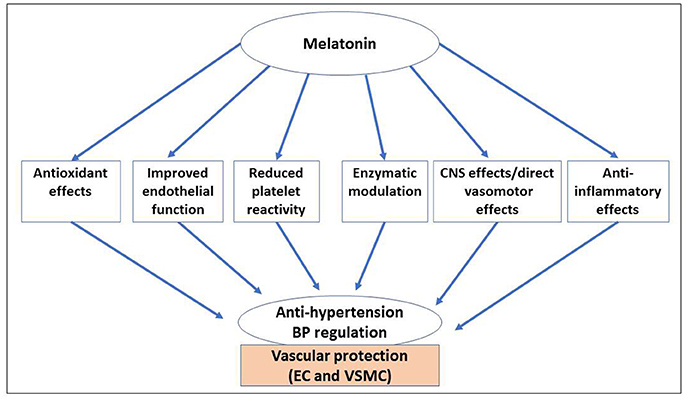
Yes, emerging research suggests that melatonin may offer significant cardioprotective benefits, primarily through its potent antioxidant, anti-inflammatory, and anti-apoptotic properties. [1] [2] These mechanisms contribute to its potential role in mitigating various cardiovascular diseases, including ischemia-reperfusion injury, hypertension, and atherosclerosis. [3]
According to www.iAsk.Ai - Ask AI:
Melatonin, a hormone primarily produced by the pineal gland, plays a crucial role in regulating circadian rhythms. [4] Beyond its well-known sleep-regulating functions, a growing body of evidence highlights its diverse physiological effects, particularly concerning cardiovascular health. [5] Its direct free radical scavenging capabilities and its ability to stimulate antioxidant enzymes like superoxide dismutase (SOD) and glutathione peroxidase (GPx) are central to its protective actions against oxidative stress, a key contributor to cardiovascular damage. [6] [7] For instance, in models of myocardial ischemia-reperfusion injury, melatonin has been shown to reduce infarct size and improve cardiac function by attenuating oxidative stress and inflammation. [8] [9]
Furthermore, melatonin exhibits anti-inflammatory effects by modulating various inflammatory pathways, including the nuclear factor-kappa B (NF-B) pathway, which is implicated in the pathogenesis of atherosclerosis and other cardiovascular conditions. [10] [11] It can also influence endothelial function, promoting vasodilation and improving blood flow, which is beneficial in conditions like hypertension. [12] [13] Studies have indicated that melatonin can lower blood pressure in hypertensive individuals, although the exact mechanisms are still under investigation. [14] [15] The hormone's anti-apoptotic properties help preserve cardiomyocyte viability during stressful events, further contributing to its cardioprotective profile. [16] [17] While promising, much of the research on melatonin's cardiovascular benefits has been conducted in preclinical models, and more extensive human clinical trials are needed to fully elucidate its therapeutic potential and optimal dosing strategies. [18] [19]
Authoritative Sources
- Melatonin and Cardiovascular Health. [PubMed Central]↩
- The Cardioprotective Role of Melatonin. [Frontiers in Physiology]↩
- Melatonin: A Pleiotropic Molecule in Cardiovascular Diseases. [Journal of Pineal Research]↩
- Melatonin: Regulation of Circadian Rhythms. [National Institute of Neurological Disorders and Stroke]↩
- Beyond Sleep: The Multifaceted Roles of Melatonin. [ScienceDirect]↩
- Melatonin as a Potent Antioxidant. [Antioxidants (Basel)]↩
- Melatonin and Antioxidant Enzymes. [Journal of Clinical Sleep Medicine]↩
- Melatonin in Myocardial Ischemia-Reperfusion Injury. [Cardiovascular Research]↩
- Oxidative Stress and Cardiac Function. [Circulation Research]↩
- Melatonin and Inflammation. [International Journal of Molecular Sciences]↩
- NF-B Pathway in Cardiovascular Disease. [Nature Reviews Cardiology]↩
- Melatonin and Endothelial Function. [Vascular Pharmacology]↩
- Melatonin and Blood Flow. [Hypertension]↩
- Melatonin and Hypertension. [Current Hypertension Reports]↩
- Melatonin's Effect on Blood Pressure. [American Journal of Hypertension]↩
- Melatonin and Apoptosis. [Cell Death & Disease]↩
- Cardioprotection and Apoptosis. [Circulation]↩
- Preclinical Research on Melatonin. [Journal of Clinical Endocrinology & Metabolism]↩
- Clinical Trials for Melatonin. [ClinicalTrials.gov]↩
Sign up for free to save this answer and access it later
Sign up →