
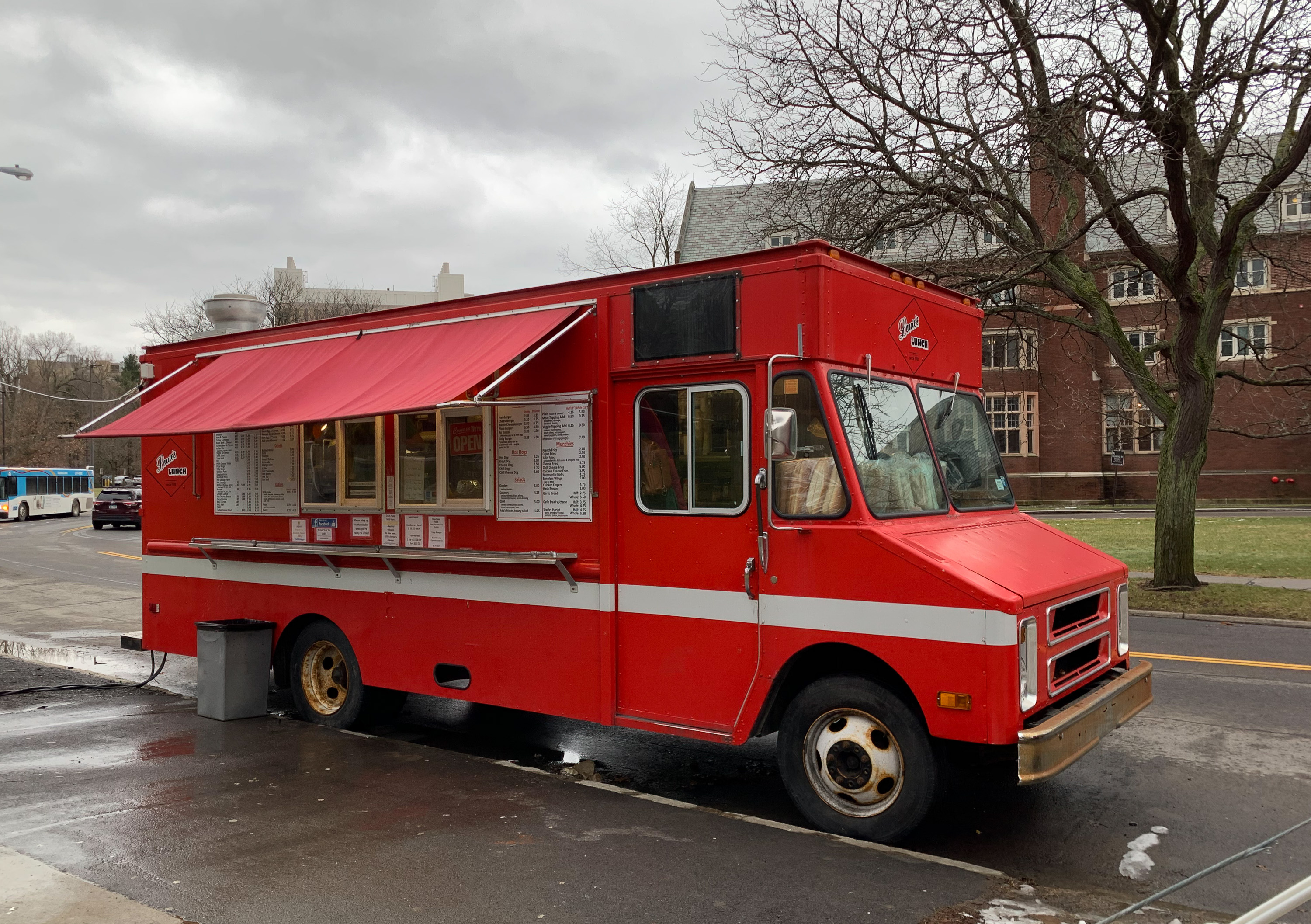
A food truck is a motorized vehicle or trailer equipped to prepare, serve, and sell food [1]. These mobile kitchens offer a wide variety of cuisines, from traditional fast food staples like sandwiches and hot dogs to gourmet, specialty, and fusion dishes [1].
According to www.iAsk.Ai - Ask AI:
Food trucks have a rich history, with precursors like the 19th-century chuckwagons and lunch wagons [1]. Charles Goodnight's chuckwagon in 1866, designed to feed cattle ranchers on long trails, is considered an early American food truck [1]. Walter Scott's "lunch wagon" in 1872, a "kitchen on wheels" selling sandwiches and coffee, further developed the concept [1]. By the mid-20th century, mobile canteens served military bases, and "roach coaches" catered to blue-collar workers at construction sites and factories [1].
The modern food truck industry experienced a significant boom in the 2010s, driven by economic shifts, technological advancements, and a growing cultural appreciation for street food [1]. This rise in popularity led to a surge in gourmet food trucks, offering diverse and creative dishes at reasonable prices [1] [4]. These gourmet trucks often focus on limited but unique menus, providing an experiential dining option that appeals to modern consumers [1] [4].
Food trucks are a major component of the street food industry, serving an estimated 2.5 billion people daily worldwide [1] [5]. The industry is substantial, with the U.S. food truck market surpassing $2.7 billion by 2017 [1].
Operating a food truck involves various business considerations, including obtaining permits, adhering to health codes, and managing equipment, labor, and fuel costs [1]. Legal definitions and requirements for food trucks vary significantly by location [1]. For instance, Toronto mandates business and liability insurance, Commercial Vehicle Operator's Registration, municipal permits, food handler certificates, and health inspections [1]. In the U.S., some cities have protectionist regulations, such as Chicago's rule requiring food trucks to park 200 feet away from brick-and-mortar restaurants, which critics argue is anti-competitive [1] [10].
Despite these challenges, the food truck industry continues to innovate. As of 2025, many vendors are adopting modular kitchen designs, eco-friendly power systems, and digital ordering to meet consumer demands [1] [9]. Social media platforms like Facebook and Twitter have also become crucial tools for food trucks to connect with customers, sharing updates on locations, specials, and new menu items [1] [11].
Food trucks are also popular for catering various events, including corporate gatherings, festivals, parties, and weddings [1] [6] [7] [8]. Organizations like the New York Food Truck Association (NYFTA) and Syracuse Food Truck Association (SYRFTA) help coordinate food truck services for events, simplifying the process of booking and managing logistics [2] [3]. Websites like Discover Food Trucks also facilitate connecting event organizers with local food truck vendors [8].
Examples of food trucks and their offerings include Utopia Bagels, Van Leeuwen Ice Cream, Vegan on the Fly, Shake Shack, Poke Motion, Ramblin Coffee, Pizza Vitale, and Yumbro [2].
Authoritative Sources
- Food truck. [Wikipedia]↩
- Film and Production Catering. [New York Food Truck Association]↩
- Good food. Good fun. [Syracuse Food Trucks]↩
- Gourmet Meals On Wheels. [The Foody Gram]↩
- Street Food: Culture, Economy, Health and Governance. [Routledge]↩
- Food Trucks for Parties & Weddings. [Food Trucks on The Move]↩
- Food truck catering! Book food trucks for your next event. [Discover Food Trucks]↩
- Discover Food Trucks. [Discover Food Trucks]↩
- How Modern Food Trucks Are Revolutionizing Street Food in 2025. [Honlu Food Trailer Blog]↩
- Food Trucks Still Under Attack from Regulators. [Reason Magazine]↩
- Will tweet for food. The impact of twitter and New York City food trucks, online, offline, and inline. [Appetite]↩
Sign up for free to save this answer and access it later
Sign up →